Client Concerns, Everyday Realities and Practical Preparation.
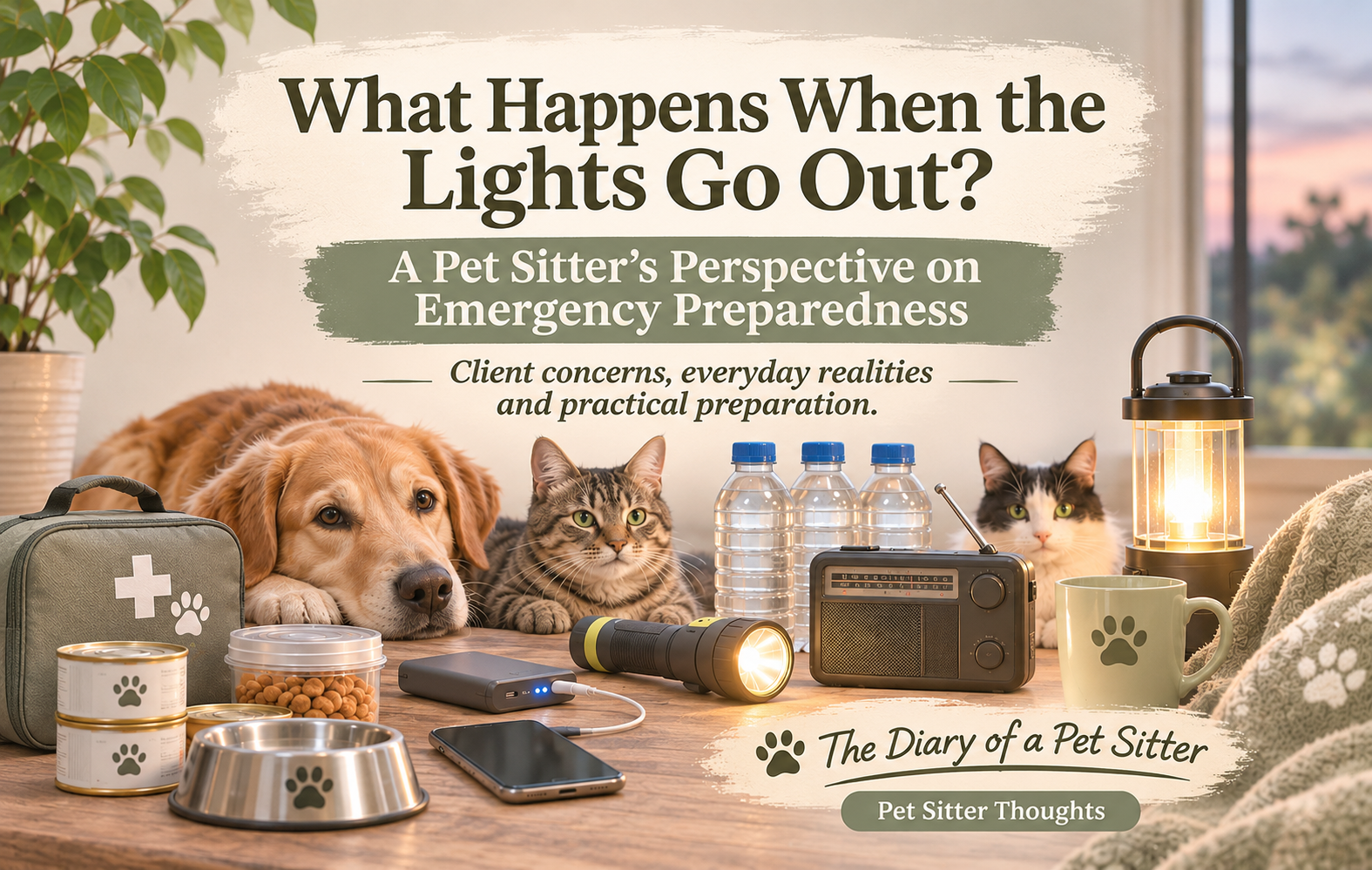
When The News Makes You Stop And Think
Every now and then, something in the news makes you stop and think about how much we rely on things that keep everyday life running. Electricity, internet access, mobile phone services and so many other things are part of our daily routines. We rarely think about how dependent we are on them until something goes wrong.
There has been a lot of discussion recently about the possibility of a major power grid failure and what it could mean for everyday life. If the power goes out on a much wider scale, it is not simply a matter of sitting in the dark. It could affect how we communicate, work, travel, shop and manage our daily responsibilities.
It got me thinking about what this would mean for me, particularly as someone who works for herself and looks after animals in other people’s homes. My circumstances today are very different from what they were the last time Cyprus experienced a major electricity crisis.
Remembering The Electricity Crisis in Cyprus
I remember the electricity crisis in Cyprus back in July 2011, following the explosion at the Evangelos Florakis Naval Base in Mari. The explosion damaged the nearby Vasilikos power station, which meant that homes and businesses across the island experienced power cuts. People could not rely on having electricity whenever they needed it, and everyday life was disrupted.
At the time, I was working for a large shipping company in an office close to home. The building had a backup generator, so we were able to continue working when there were interruptions to the electricity supply.
At home, we simply had to work around not having electricity. Thankfully, we still had running water, although the pressure was low. I managed well under the circumstances, even though I cannot fully remember exactly how long the disruption lasted.
I did not have any pets at the time either. I did not get my first dog, Princess, until September that year. So, back then, it was just me to think about.
My work did not depend on constant phone calls or arranging appointments throughout the day. I had a regular salary, my workplace had a generator and I was able to carry on with life without it affecting me too much.
Looking back, it was a very different situation from what I might face today.
How Different Things Are Now
These days, I work for myself as a pet sitter. My business depends on clients booking me to visit their homes, walk their dogs and look after their pets while they are away.
Most of my regular clients are out of the house during the day, which is why they arrange visits in the first place. But if there were a prolonged power cut and people could not work normally, some might end up staying at home. Their usual dog walks or lunchtime visits might not be needed.
Then there is the internet. If that is unavailable too, keeping in touch with clients, checking messages and organising appointments becomes much more difficult. It could affect how I run my entire working day.
And, of course, being self-employed means that if I cannot work, I do not get paid. That is something I have to consider as well. I would much rather be out working and earning than suddenly losing days of income.
The bookings I would need to prioritise would be those where clients had travelled abroad and were relying on me to care for their pets while they were away. Those animals would still need their usual care, regardless of what was happening outside.
There are other practical things to consider too. I would want to make sure I had enough fuel in my car, particularly if I needed to travel to those appointments. I already prefer to keep my tank topped up rather than wait until it is nearly empty.
I was talking to my mum about this recently, and we got onto the subject of cash. I had been planning to withdraw an extra €20 when I went to the cash machine, just to have a little money available. My mum suggested having considerably more. I asked her how much she thought was sensible, and she said €500! I thought that was quite a difference from the €20 I had in mind. I could technically do that, but I do not particularly want to keep that much cash at home. I had been thinking about taking out an extra €20, which was already an additional expense to consider with my weekly budget. Like most people, I have regular bills, groceries, fuel and other commitments to think about. I still need to make sure I have enough money available for those expenses once normal services resume.
And that is something worth remembering. Not everyone can afford to withdraw large amounts of cash or buy weeks of additional supplies in one go. Preparation has to be realistic and manageable.
It did make me think, though. If card payments or electronic banking were unavailable, having some cash could be useful for buying essentials or paying for fuel. Prices and availability could also be affected by a major disruption, so it is worth thinking about what you might need rather than assuming everything will carry on as normal.
There is something slightly ironic about being told to keep cash available. For years, we have been encouraged to move towards a cashless society, using contactless cards, banking apps and online transactions. I have become so accustomed to paying by card that I rarely carry much cash on me. Now we are reminded that having some physical money available could be useful if electronic payments are disrupted.
Of course, that makes sense, but it is another adjustment to think about, especially when people are already managing tight household budgets.
I remember going to a supermarket in Cyprus a couple of years ago when the JCC card payment system went down. People had shopping carts full of groceries, ready to pay by card, only to discover that the system was unavailable. Cash was the only alternative, and so many people did not have any. Some had just a few coins in their pockets. I cannot remember whether I eventually managed to pay or decided to leave my shopping and return at another time, but it certainly made me think about keeping at least €20 in cash for situations like that.
Now, with the possibility of wider disruptions being discussed, we are being reminded to have physical cash available again. It makes sense, but it is another thing to consider when most of us have become so accustomed to paying electronically.
And then there is the financial reality too. Not everyone has savings or hundreds of euros they can withdraw and put aside. People have rent, bills, groceries, fuel and other commitments to manage. Even a small additional amount has to come from somewhere. I think preparation needs to be realistic and affordable, rather than making people feel they have to spend money they simply do not have.
There is something else I would be concerned about, particularly when travelling between appointments: what happens if I have a problem with my car?
I recently had a punctured tyre after finishing a client visit. Thankfully, I was able to use my phone to contact a mobile tyre service and arrange for someone to come out and help me. It was a straightforward solution because I could make a call and get assistance.
But what if something like that happened during a major power and communications outage? A punctured tyre, a flat battery or another problem that leaves your car undriveable could suddenly become a much bigger issue. How would you contact roadside assistance or a mobile repair service if phone networks were affected? Where would you turn for help?
It is something I had not really considered until now. When you rely on your car for work, the thought of becoming stranded somewhere without being able to contact anyone is another worry.
The Difficulty of Being a Pet Sitter During an Outage
There is another side to this that I keep thinking about. As a pet sitter, I cannot simply decide to stay home if I have animals depending on me.
If a warning is issued ahead of time, I would need to contact any clients with upcoming bookings and discuss cancelling or changing arrangements. Travelling during a major disruption would not be ideal, particularly if phone networks and other services were affected.
But what if the warning arrives while a client is already abroad? Their pet still needs care. What if their return flight is delayed or cancelled, and they do not have an emergency contact in Cyprus who could step in?
That puts a pet sitter in a difficult position. I have my own pets at home, and I have responsibilities towards them too. I cannot simply move into a client’s home and stay there until everything returns to normal.
Then there is the question of travelling in the first place. What happens if my car breaks down, or I need roadside assistance? We normally take for granted that we can pick up our phone, call our insurance company or arrange help.
I also have to consider the security of my own home. If internet services are down, my home surveillance cameras may no longer be accessible remotely. Having already experienced concerns about the security of my property, that is not something I would take lightly.
These are the things that make emergency planning particularly complicated when your work involves travelling and caring for animals in other people’s homes. It is not simply a question of whether you have enough supplies to stay indoors for three days. It is about knowing what to do when other people and animals are depending on you, while also making sure you and your own pets are safe.
Our Pets Need To Be Part of The Plan
If you have pets, their needs should be included in any basic emergency preparation.
Think about having a little extra of their usual food, enough drinking water, essential medication and the everyday things you need to look after them.
It is worth keeping your vet’s contact details somewhere you can find them easily, along with any important information about your pet’s feeding and medication.
If you normally rely on a pet sitter, it is a good idea to have a conversation about what might happen if usual arrangements are disrupted. Equally, if someone else might need to help with your pet, make sure they know where the food and other essentials are kept.
A little planning beforehand can save a lot of confusion later.
Remembering The Animals Outside Our Home
There are also animals we care about who do not necessarily live with us.
I regularly put food out for the wild birds that visit my windowsill, and I also feed stray cats in my neighbourhood. It has become part of my everyday routine. The cats recognise me and often wait for me as I come and go, while the birds return when they know there is food available.
If I were putting together a few extra supplies, I would include some packets of bird seed and cat food also.
Of course, we cannot prepare for every animal outside, but we can think about the ones we already help. Keeping a little extra food available, without going overboard, is a simple way of including them in our plans.
A Few Things Worth Having At Home
You do not need to spend a fortune or fill your cupboards with months of supplies. But having a few basics available could make a power cut much easier to manage.
A useful starting point is to think about how you would manage for the first 72 hours without normal electricity or internet access. This is a common emergency preparation guideline, not a guarantee that everything will be back to normal after three days.
Here are a few simple things worth considering:
Water: Keep drinking water available for yourself and your pets.
Food: Have some food that does not need refrigeration or complicated cooking.
Lighting: Keep a torch or rechargeable lantern somewhere easy to find.
Phone Charging: A fully charged power bank can be useful when you cannot plug in your phone.
Medication and First Aid: Keep essential medication and a basic first-aid kit together.
Important Contacts: Write down important phone numbers as well as keeping them saved on your phone.
Cash: Have some cash available in case card payments or electronic banking are unavailable.
Fuel: Try not to let you car’s fuel tank get too low if you rely on it for essential journeys.
It is also worth thinking about how you would receive updates if your internet connection stopped working. Official emergency alerts and radio broadcasts can be useful. Personally, I would also consider using the radio in my car to listen for updates if needed.
And remember the fridge and freezer. If the electricity goes off, try to keep their doors closed as much as possible so they stay cold for longer.
Preparing Without Panic Buying
I am not someone who buys months of groceries in advance. I usually do my shopping weekly and buy what I need as I go.
But I do think it is worth looking around the house and seeing what you already have. Perhaps you have a torch but no batteries, or a power bank that has not been charged in months. Maybe you can keep an extra packet of pet food in the cupboard.
You do not have to buy everything at once. You can gradually add a few useful things to your normal shopping.
It is about being sensible, not stockpiling or spending money unnecessarily.
A Little Preparation Can Make a Difference
When I think back to 2011, I remember being able to manage quite comfortably. I had no pets, a regular job at a workplace with backup power. My circumstances were very different.
Today, I have my own business, my own pets and animals in the neighbourhood that I care for. There are more responsibilities to think about, and a prolonged disruption to electricity and internet access could affect my work and everyday life in ways that I did not have to consider back then.
I cannot predict what might happen or how long any disruption could last. But I can think ahead, make a few practical arrangements and consider the people and animals who depend on me.
You do not need to become a doomsday prepper. You just need to think about what you would genuinely need, what you can reasonably afford, and what small steps you can take now.
For me, that is what being prepared is really about. Not expecting the worst, but knowing that if something unexpected happens, I have at least thought about what to do.